




Are wool blankets suitable for year-round use?
Key Takeaways
- Wool provides natural insulation, making it particularly useful during cooler weather.
- Wool fibres can absorb and release moisture, which can help a blanket feel comfortable across changing conditions.
- A wool blanket can be layered rather than reserved only for the depths of winter.
- Different weights and constructions suit different seasons and uses.
- Wool blankets can work indoors and outdoors, depending on the design and conditions.
- Good care can help a quality wool blanket remain part of the home for many seasons.
Yes, wool blankets can be good all year. Wool fibres naturally help regulate temperature, providing warmth when it is cold without always feeling overly heavy when conditions are milder. A quality wool blanket can move from the sofa to the bedroom, picnic rug or campsite as the seasons change, making it a wonderfully useful piece to keep close at hand.
Why are wool blankets good all year?
It is easy to think of wool as something you pull from the cupboard when winter arrives. And, of course, wool really comes into its own on cold mornings and chilly nights. But that is only part of the story.
Wool fibres have a naturally crimped structure that traps pockets of air. This provides insulation and helps slow the transfer of heat. In winter, that means a wool blanket can help retain warmth around your body.
At the same time, wool can absorb water vapour and release it again as surrounding conditions change. That moisture-management ability is one reason wool can remain comfortable when temperatures fluctuate.
This makes wool surprisingly adaptable. Rather than thinking of a blanket as something that belongs to one particular season, it can be more useful to think about how you layer it. On a cold night it might sit over your doona. During milder weather, the same blanket may be all you need across your legs while reading on the sofa.
Can you use a wool blanket in summer?
You certainly can, although the way you use it will probably change.
An Australian summer does not necessarily mean every evening is warm, particularly in regional and elevated areas. Temperatures can drop once the sun disappears, and a light layer can suddenly feel very welcome.
A wool blanket can be useful for sitting outside after dinner, wrapping around your shoulders beside a fire pit or adding a little extra comfort on a cooler night away from home. On warmer nights, you might fold it at the end of the bed rather than sleeping beneath it.
The trick is choosing the right weight for the conditions. A thick, dense blanket that feels glorious in July might be more than you need in January. A lighter wool blanket gives you greater flexibility.
What makes wool so useful during autumn and spring?
Autumn and spring are perhaps where wool's versatility makes the most sense. These are the months when you can leave home in sunshine and find yourself searching for an extra layer a few hours later.
Wool works well during these transitional seasons because you can add or remove it easily as conditions change. Keep a blanket over the back of the sofa for a cool evening, fold one at the foot of the bed, or take it outdoors when the forecast looks a little uncertain.
The same thinking applies to what you wear. A merino wool scarf, for instance, is an easy layer to add when the air cools without committing to heavy winter clothing.
There is something rather nice about this approach. Instead of completely changing your home and wardrobe every few months, wool pieces can simply shift roles as the season moves along.
Why does a wool blanket work so well in winter?
Winter is where a wool blanket earns its traditional reputation.
The air trapped within wool's naturally crimped fibres helps create an insulating layer. Put a blanket over your lap on the sofa or add one to your bed and it helps retain body heat, giving you that familiar cocooned feeling without relying solely on bulk.
For especially chilly days, layering wool is often more practical than depending on one enormous blanket. You can add what you need and remove a layer if the room warms up.
Colour and pattern can make the seasonal shift feel good too. A traditional checked wool blanket brings warmth visually as well as physically, particularly when paired with natural textures, timber and the softer colours we tend to gravitate towards in winter.
How can you use a wool blanket beyond the bedroom?
A blanket does not have to spend its life neatly folded at the end of a bed. In fact, some of its most memorable uses happen elsewhere.
Depending on its construction and intended use, a wool blanket can become part of weekends away, afternoons outdoors and everyday life around the house. You might use yours:
- across your knees while having your morning coffee outside
- as an extra layer on the sofa during a film
- over the bed when the temperature drops overnight
- around your shoulders while sitting around a campfire
- for picnics and relaxed afternoons in the countryside
- in the car for road trips, unexpected cold snaps or spontaneous stops.
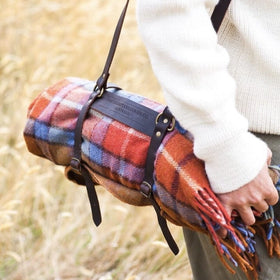
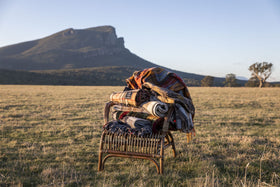
If you are specifically looking for something designed to head outside, consider the intended purpose rather than assuming every indoor blanket should double as a picnic rug. Grampians Goods Co.'s Heritage Collection All Weather Adventure Blankets are made with adventures in mind and are a practical option when looking at picnic blankets in Australia or a camping blanket with wool comfort.
What should you look for in a year-round wool blanket?
Start with how you genuinely live. It sounds obvious, but the blanket that works beautifully in one household may spend most of the year in a cupboard in another.
If you want something primarily for the bedroom, consider the weight, dimensions and how it will layer with your existing bedding. For the living room, softness, colour and pattern might carry more importance because the blanket is likely to stay on display.
For a blanket that will travel, durability and practicality matter more. Think about whether it will regularly be packed into the car, taken camping or carried outdoors.
It is worth considering these details before choosing:
- Weight: lighter blankets can be easier to use across spring, summer and autumn, while heavier options offer welcome insulation in winter.
- Size: think about whether you want personal coverage on the sofa or a generous layer for a bed.
- Intended use: indoor throws and outdoor adventure blankets have different jobs.
- Colour and pattern: choose something you will be happy to leave out rather than hide away.
- Care: always follow the care instructions provided for your particular wool product.
If you love classic pattern, a plaid blanket is easy to live with throughout the year. Tartan and checks are not limited to winter styling either. Against lighter linens and natural materials, they can look just as at home in spring or on a cool summer evening.
How do you style wool blankets throughout the seasons?
You do not need to redecorate the room every time the weather changes. A few small shifts are usually enough.
During autumn and winter, let the blanket become part of the room. Drape it over the arm of a chair, layer it across the bed or fold it loosely over the sofa. Deeper colours and checks can create that warm, settled feeling that suits colder days.
As spring arrives, try pairing wool with lighter materials. Linen, cotton, pale timber and relaxed neutral tones can stop a wool blanket from feeling visually heavy.
In summer, simply use less of it. Fold the blanket neatly at the end of the bed or keep it within reach for cooler evenings rather than making it the centre of your bedding.
Texture can carry through the rest of the room too. A tartan cushion can echo a favourite blanket without making the space feel overly coordinated. Sometimes a little mismatch actually feels more lived-in.
How should you care for a wool blanket between seasons?
Good wool does not need constant fussing, but it does benefit from thoughtful care.
Always begin with the manufacturer's care label, as washing and drying recommendations can differ depending on the particular blanket and its construction. Avoid assuming that every wool product can be treated in exactly the same way.
When a blanket is not being used regularly, store it clean and completely dry in a cool, dry place. Folding rather than tightly compressing it can help keep it ready for the next cold evening.
And perhaps do not be too quick to pack it away when winter ends. Wool's usefulness is really in those in-between moments: the unexpectedly chilly spring morning, the summer evening that turns cool or the autumn picnic that lasts until sunset.
Ready to find a wool blanket for every season?
So, are wool blankets good all year? For many Australian homes, yes. Their natural insulation, moisture-management properties and ability to work as an adjustable layer make wool blankets useful well beyond winter.
The right blanket can move around with you rather than being stored for half the year. It can warm the bed in winter, live on the sofa through autumn, come outside on a cool spring evening and join you on summer adventures when the temperature dips.
Explore the range of blankets and other wool pieces from Grampians Goods Co. and find something made to become part of everyday life, whatever the season happens to be.